Introduction
Most team leaders know that coaching is essential, but let's be real—most 1:1s don't actually move the needle. They turn into check-ins, casual conversations, or surface-level feedback with no real impact. Meanwhile, pipeline reviews often feel like data dumps rather than strategy sessions. The result? Agents aren't improving, conversion rates stagnate, and leaders feel like they're spinning their wheels.
The key to fixing this? Running structured, data-driven coaching sessions that actually drive results. This guide walks you through how to coach agents more effectively, break down their pipeline, and deliver high-impact pipeline reviews that help agents close more deals. Want the meeting agenda to keep on your desk? Get the free pipeline review guide.
Why most pipeline reviews fail...
Leaders tend to go with their gut, instead of using real data.
Without hard data, coaching becomes guesswork. If an agent isn't closing deals, is the issue their close rate? Their follow-up? Their answer rate? Without precise insights, leaders coach the wrong things and fail to drive meaningful improvement.
A lack of confidence eventually leads to a lack of consistency.
Most leaders don't have a system to track agent progress, making it hard to measure improvement, identify bottlenecks, and hold agents accountable. Without clear tracking, coaching efforts lose momentum, and consistency breaks down over time.
They focus on broad themes instead of individual needs.
Many leaders rely on group training, believing it's the most efficient way to develop their team. But broad sessions fail to address performance gaps. A one-size-fits-all approach leaves top performers disengaged, and struggling agents lost amongst the crowd.
So we made this.
Setting Expectations
Clear expectations drive performance by eliminating uncertainty. Agents should know success metrics upfront—from response times to conversion goals. Without set standards, coaching becomes reactive, leading to inconsistency. Establishing expectations early ensures accountability, improves execution, and fosters a high-performance culture.
Use the P.I.E. Framework to Drive Accountability
- Partnership: This is a mutual commitment.
- Investment: We invest heavily in these partnerships.
- Expectation: Like every great partnership, there are expectations on each side.
Create an Agent Success Agreement outlining expectations and have every agent acknowledge it. This prevents misunderstandings and reinforces accountability.
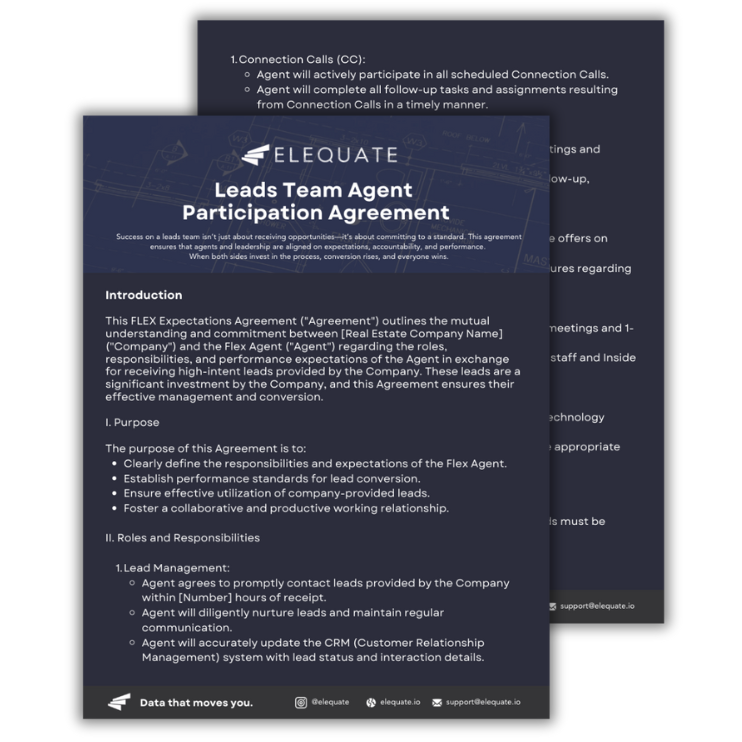
Lock It In!
Pipeline reviews only work when they happen consistently. If coaching sessions aren't scheduled and protected, they become reactive, inconsistent, and ultimately ineffective. A high-performing team operates on a rhythm — not random check-ins. Locking in a 30-minute pipeline review every 1-2 weeks ensures that agents receive structured, data-driven coaching that actually improves performance.
Key Best Practices:
- Put it on the calendar and protect the time. No chasing, no rescheduling.
- Let the agent pick their slot. Ownership increases commitment.
- Position it as a growth opportunity, not a performance review.
Treat pipeline reviews as an investment, not an obligation. Agents who consistently engage in structured coaching see higher conversion rates, better accountability, and faster skill development.
Prep & Diagnose
The best pipeline reviews start before you sit down. Walking in prepared shows the agent you've invested in their success—and keeps the conversation focused on what actually moves the needle instead of guesswork.
Key Best Practices:
- Come prepared. Review their pipeline in advance to focus on what matters.
- Send insights early. Share key metrics, call recordings, and questions before the meeting.
- Make it about growth. Coaching should inspire progress, not just track performance.
Never surprise an agent with bad data in a review. Send it ahead and let them self-reflect first—they'll show up ready to solve, not defend.
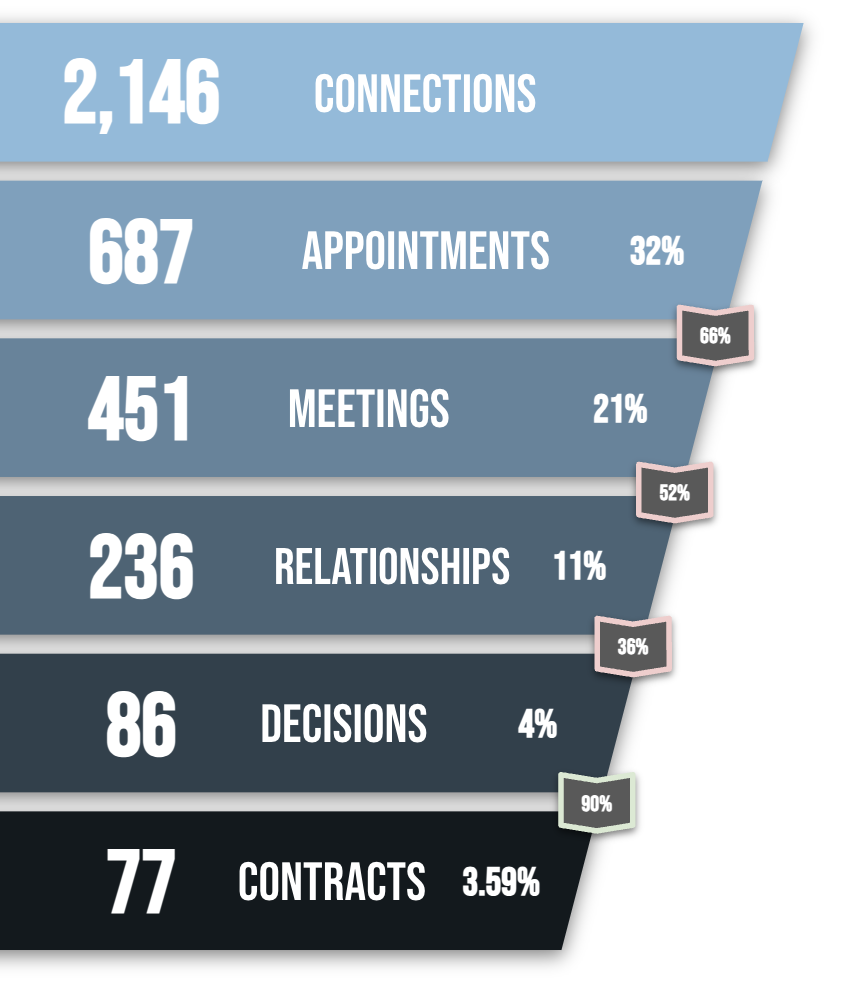
Follow the Funnel
Most teams don't struggle with getting leads—they struggle with managing them effectively. We know that 10% of online leads convert in the first 6 months (NAR), yet the average team converts less than 4%—leaving millions in lost revenue on the table. Teams that don't track and optimize their pipeline leave an average of $2.5M in GCI of identified opportunity on the table annually.
Funnel data provides leaders with a structured approach to tracking agent performance at every stage. A well-managed pipeline helps leaders spot where deals are getting stuck and strategically coach agents on the exact behaviors they need to drive higher conversion.
Curious about YOUR funnel?Tactical Guidance
Great coaching isn't about telling agents what to do—it's about guiding them to the right answers through strategic questioning and hands-on skill development. The best leaders create an environment where agents feel supported, challenged, and empowered to improve.
Key Best Practices:
- Create an environment for growth. Coaching isn't about catching mistakes—it's about building confidence and mastery.
- Lead with questions. Help agents uncover their own solutions rather than just giving directives.
- Roleplay real scenarios. Practice key conversations to sharpen skills and build confidence.
Agents grow the most when they feel ownership over their development. Tactical guidance helps them think critically, adapt quickly, and build the habits that drive long-term success.
The Six Key Elements
of Agent Performance
To coach effectively, break agent performance down into six core stages of the sales process. Each stage requires a different coaching approach. Your job is to diagnose the weak link and focus coaching there.
Why This Is Important:
Managing lead distribution effectively is critical to agent growth, yet often overlooked by leaders. Too many leads can overwhelm agents, leading to cherry-picking and inconsistent follow-up, while too few limit revenue potential. The sweet spot? Around 10 high-intent leads per agent per month, ensuring every opportunity receives the same high level of service. Striking this balance not only maximizes conversion but also improves answer rates—one of the first indicators of whether an agent is managing their pipeline efficiently.
What to Look For:
Low Pickup & Answer Rates. High Release Rates typically indicate cherry picking.
What Success Looks Like:
Agents should ultimately have a 60% answer rate or better.
How to Coach to This:
Ask the agent about their bandwidth! In many cases, having a transparent conversation about their call metrics will improve numbers, because they know you're actually taking time to track THEIR business.
- Do they have a lot of SOI and referral business right now?
- Do they understand the unique DNA of the customer?
- Are they bought in on the lead source?
Why This Is Important:
Agents who ask for the appointment early in the call with high-intent leads consistently outperform those who rely on outdated qualifying frameworks like LPMAMA. At Elequate, we teach the CALM framework in Lead Certification, which shifts agents from an agent-centric mindset to a people-first approach. This method prioritizes engagement over interrogation, making it easier to secure commitments without unnecessary friction.
What Success Looks Like:
Agents should set appointments with 70% of the customers they engage with.
How to Coach to This:
Call Scoring is THE best way to fix an agent's appointment rate quick. Agents will appreciate your roleplaying more when you have the data to show them the parts where they are struggling!
- Score 2-3 calls before meeting the agent.
- Send them the recording links 24 hours before the 1:1 and have them come prepared with their notes beforehand.
- Hear them out, then share your feedback. Roleplay the sticky bits.
Why This Is Important:
Setting appointments is cool. Actually meeting customers is way cooler though. Unfortunately agents often have their appointments with internet leads fizzle before actually showing. In most cases this is due to the follow-up and the vibes the customer experiences immediately after the first call. At Elequate we teach the Half-Hour Hustle—10 ways an agent can bring value in the first thirty minutes to WOW the client and WIN their business.
What Success Looks Like:
Agents should be meeting with 50% of the opportunities they speak with.
How to Coach to This:
Talk to the agent about their typical strategy immediately after the first call. Have them walk you through their cadence:
- Are they sending video introductions with their contact information?
- Are they getting back to the customer within the first 30 minutes?
- Are they calling customers back or just texting after the first call?
Why This Is Important:
Meeting customers and keeping customers are two different things. With online home search being cold and mechanical, it's important to get as much voice/face time with the client. Actually calling instead of texting—and booking multiple homes on the first showing—is how top producers humanize the experience and give customers something to gravitate to.
What Success Looks Like:
Agents should keep 40% or more of their opportunities in their active funnel.
How to Coach to This:
Have a conversation with the agent about how they are preparing for their showings. Understanding the buyer's needs and going the extra mile helps us stand out and win more business!
- How many homes did they show on the first appointment?
- Is the agent proactively making recommendations and explaining their thought process?
- Is the agent personalizing their outreach, or relying on automated messages and generic scripts?
Why This Is Important:
Trust is so important to the sales process. It helps customers lean into our recommendations and have confidence during their home search. One of the main causes of customers losing confidence is when communication and follow-through break down. Keep the customer feeling prioritized and bring value throughout the entire process.
What Success Looks Like:
Agents should write offers with 20% or more of the customers they speak with.
How to Coach to This:
Build a list of all the customers your agent has at the ‘Showing Homes’ stage in your CRM. Send it to them 24 hours before their next 1:1 and have them come prepared with answers for each client:
- What is important to this customer?
- What is your very next step?
- What are we doing to go above and beyond, TODAY, to bring value and earn their business?
Why This Is Important:
Agents get less and less practice at each sales stage the further down the funnel they go. New agents get lots of reps making cold calls, but it can take years to get enough customers to the negotiation table to master that part of the craft. The same goes for writing competitive offers and getting them accepted!
What Success Looks Like:
Agents should close 10% or more.
How to Coach to This:
One of the quickest ways to improve an agent's Contract Rate is to have them bring 100% of their offers to you BEFORE they are submitted for 90 days. Look for missteps and make suggestions:
- How does the agent go about setting up the offer with the buyer?
- Do they reach out to the lender and the seller before submitting?
- Do they ask about the other competitive offers, and when the submission deadline is?
Why This Is Important:
If you participate in an enhanced market with ZHL and/or Zillow Seller Connections, you will likely have other metrics you want to track—like Engaged Transfers and Listing Agreements. Getting the lender connection right early is a major driver of conversion in these markets.
How to Coach to This:
Make a list of all the opted-in customers in the agent's CRM and ask them the following about each:
- Do they know which LO they are going to use?
- Have they mentioned it to the customer yet?
- Have they connected with the LO directly and sent the 3-way text with the client?
Track Everything
A great pipeline review doesn't end when the meeting does—it continues through tracking, execution, and refinement. Without structured follow-up, even the best coaching conversations lose impact. High-performing teams track progress, measure improvements, and adjust coaching based on real data.
Key Best Practices:
- Commit to improvement: At the end of each session, have the agent identify 1-2 key areas to focus on before the next 1:1.
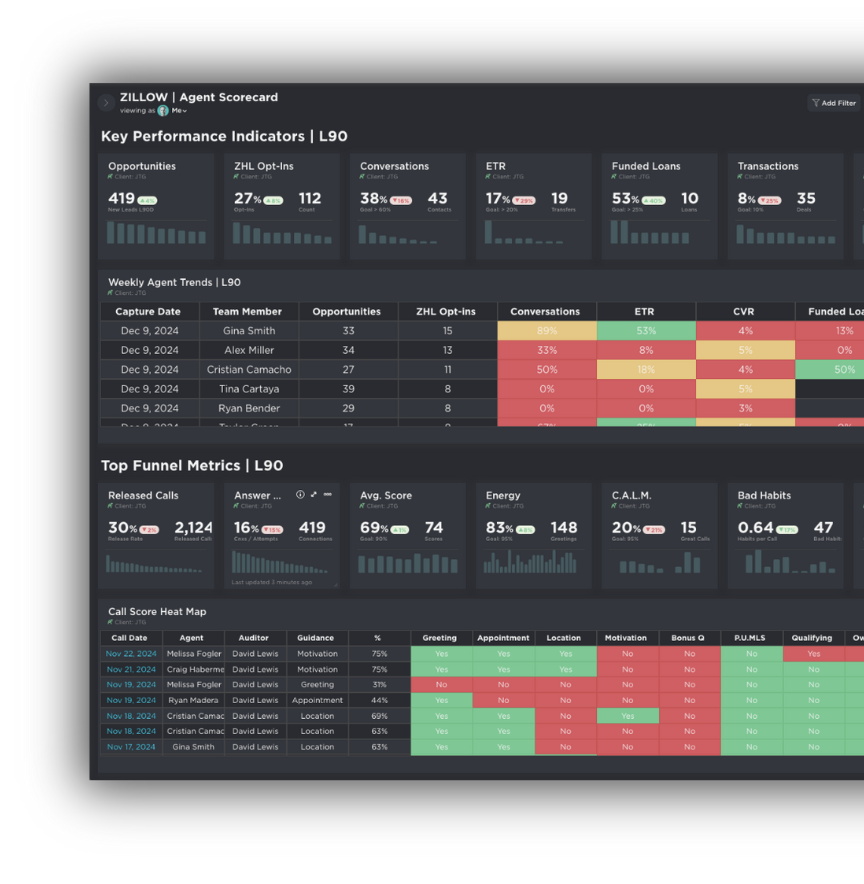
- Use data, not memory: Leverage a platform like Elequate to track performance trends and coach with precision.
- Personalize every session. Review past notes, call scores, and key metrics to refine coaching each cycle.
Unlike other platforms, Elequate doesn't just track numbers—it translates them into clear, actionable insights for coaching that actually improve conversion.
Frequently Asked
Set the expectation before the meeting, coach off data instead of guesswork during it, and track what happens after. Most pipeline reviews fail on the third part — the conversation goes fine and nothing changes, because nobody wrote down what was agreed or checked it the following week. We published the full five-step framework as a free guide, and it works whether or not you ever use our platform.
Know. Your. Numbers.
Pssst… want to know what your sales funnel looks like? Let's run the numbers. Get a free Pipeline Assessment and find out exactly where your agents are losing deals.
Get a Free Funnel Assessment